Most small businesses look at an AI tool’s price tag and think that’s the whole cost. €20 a month for ChatGPT, a few cents per API call, done. But the invoice is only part of the picture — and understanding the rest of it is actually part of the AI literacy the EU AI Act asks you to have.
## What’s actually behind the subscription
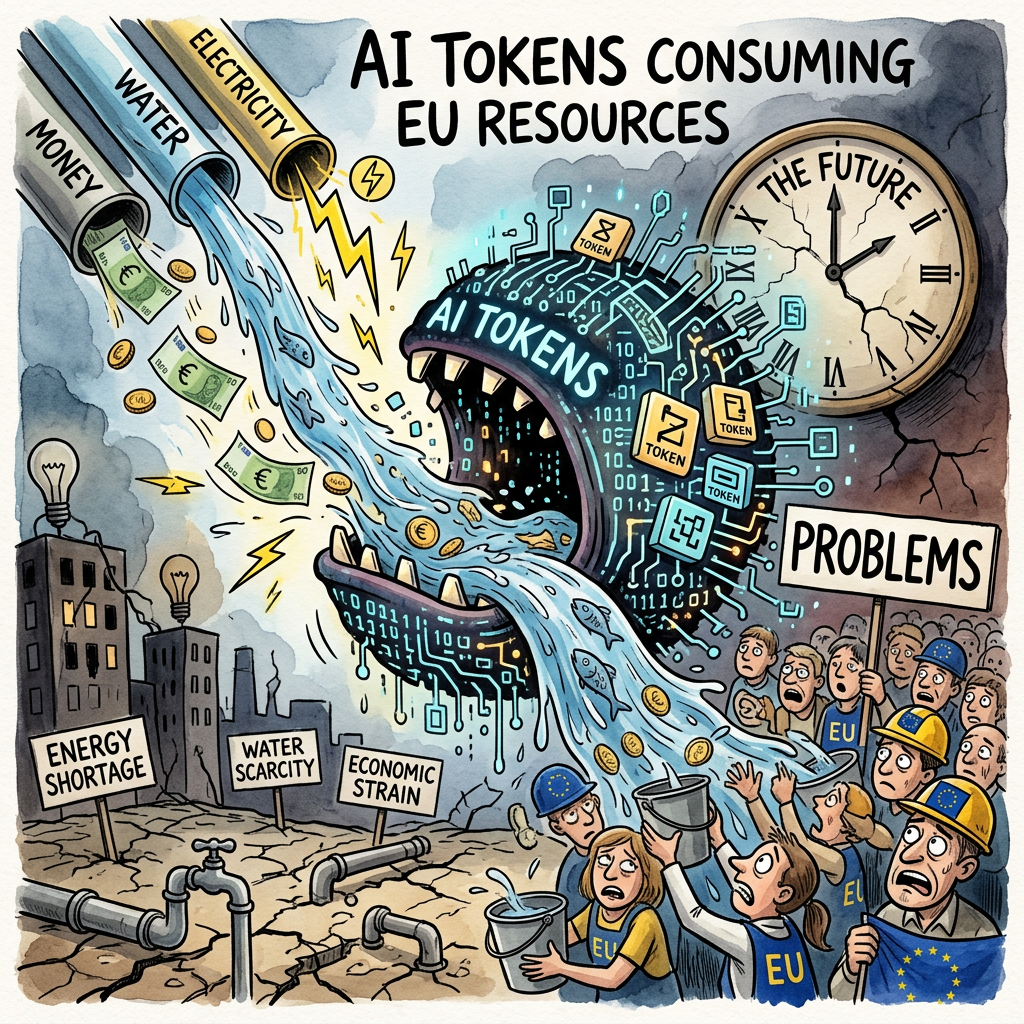
Every AI query runs on a data center somewhere, and data centers have three real costs that don’t show up on your bill:
**Water.** Large AI models need serious cooling. A single data center can use millions of liters of water a year, mostly for cooling systems. You’re not paying for this directly, but it’s a real resource cost tied to every query you send.
**Energy.** Training and running large models takes electricity, a lot of it. Running a query through a large model can use significantly more power than a regular web search. Multiply that by every employee, every day, and it adds up in ways a monthly subscription fee doesn’t reflect.
**Token pricing.** If you’re using AI through an API rather than a flat subscription, you’re paying per token, roughly per word processed. This is where costs quietly scale. A team of five people using AI for reports, emails, and analysis can rack up token costs that dwarf what any of them expected when they signed up.
## Why this matters for your AI literacy, not just your budget
Article 4 asks you to make sure your team actually understands the AI tools they use, not just how to click the buttons. Understanding cost is part of that. A team that doesn’t know how token pricing works can’t tell you why the AI bill tripled last month. A team that doesn’t know about the energy and water footprint can’t make an informed call when a client or partner asks about it.
This isn’t about guilt-tripping anyone into using AI less. It’s about knowing what you’re actually using, which is the entire point of the literacy requirement.
## What to actually do about it
1. **If you’re on API pricing, check your token usage monthly.** Most providers show this in a dashboard. If nobody on your team has looked at it, that’s a gap.
2. **Set a rough per-employee budget for AI usage.** Doesn’t need to be strict, just a number that flags when something’s off.
3. **Know which tool runs on which infrastructure.** A subscription tool (ChatGPT Plus, Copilot) has a fixed cost. An API-based tool scales with usage; that’s a different kind of risk to plan for.
4. **If a client or partner asks about your AI’s environmental footprint, have an honest answer ready.** “We don’t track that” is a worse answer than “here’s roughly what we use it for and how.”
None of this requires a sustainability report or a data science degree. It requires actually knowing what’s happening when someone on your team opens ChatGPT.
## The bigger point
The EU AI Act’s literacy requirement isn’t really about memorizing article numbers. It’s about not being surprised by your own tools, whether that surprise comes as a fine, an unexpected bill, or a question you can’t answer. Cost is one of the more concrete ways to notice whether your team actually understands what they’re using, or just uses it.
If you haven’t looked at your AI tool inventory yet, the [free 2-minute check](https://ubiquitous-speculoos-b7258f.netlify.app/check.html) is a reasonable place to start — it covers the compliance side. This post covers the cost side. Together they’re most of what “AI literacy” actually means in practice.


Leave a Reply